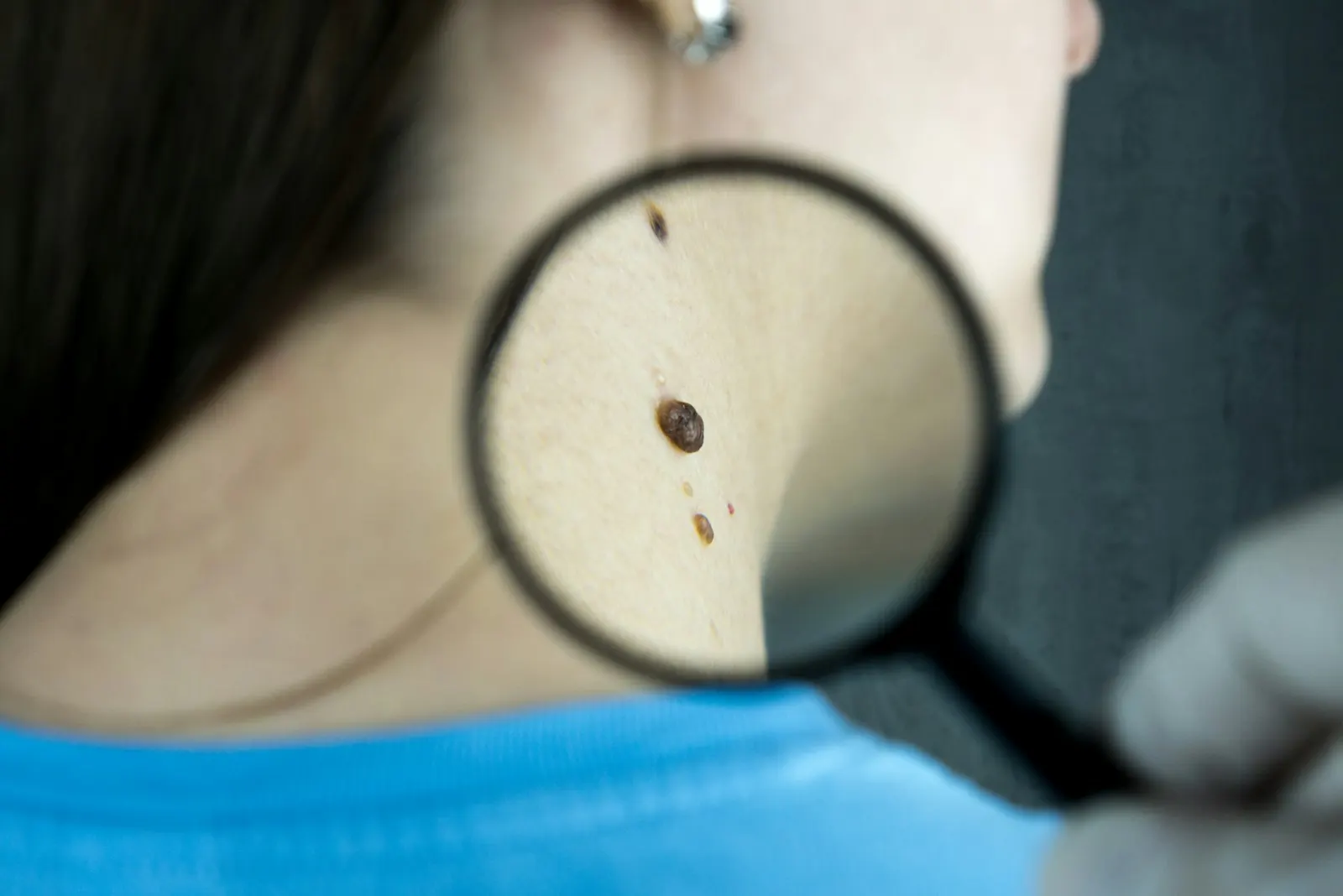
What it is
Brown growths on skin is a broad, everyday phrase. It can describe many different things, including seborrheic keratoses (often described as waxy, stuck-on looking spots), skin tags (soft, small flaps of skin), moles, and other spots. Some people also call these growths "warts," though they are not always the same thing.
Seborrheic keratoses are generally known as common, noncancerous skin growths that can vary in color from light tan to dark brown. Skin tags are usually soft and skin-colored to slightly darker. Looks can overlap, which is why a visual guess at home is not a reliable way to know what something is.
Warts, which are linked to HPV, can sometimes look brownish too. Telling these apart takes a trained eye. This page is educational only and cannot tell you what your growth is.
A note on skin cancer safety: a growth that is changing, bleeding, itching, irregular in shape or color, or not healing should be checked by a dermatologist for skin cancer. Please do not self-treat it.
How it’s traditionally been approached
Many harmless brown growths are simply watched over time. A clinician may look at the spot, sometimes with a magnifying tool, and talk through whether monitoring or removal makes sense.
When removal is chosen, often for comfort, irritation from clothing or jewelry, or appearance, traditional options include freezing (cryotherapy), scraping or shaving the surface, snipping, or surgical excision. Which option fits depends on the growth, its location, and the person, and that decision belongs to a licensed clinician after an evaluation.
If a clinician is unsure about a growth, they may remove all or part of it and have it examined in a lab. Results vary, and growths can return or new ones can appear. Over-the-counter wart products are not designed for brown growths in general, and people with diabetes, poor circulation, neuropathy, or a weakened immune system should ask a provider before treating anything at home. Cutting, burning, or digging out a growth at home is never advised.
How the right provider may help
The right provider, such as a dermatologist or primary care clinician, may help by first identifying what the growth actually is. A visit generally includes a conversation about when you noticed it and whether it has changed, followed by a skin exam. You can usually ask them to look at other spots too.
Helpful questions to bring: What do you think this is? Does it need to be tested or just monitored? If I want it removed, what are the options, and what might healing look like? Could it come back? How should I keep an eye on it afterward?
Many people feel self-conscious about visible growths, and that is very normal. A good provider will explain things plainly and without judgment, and will respect your choices about what you do or do not want done.

The whole-person view
The body, mind, and stress all influence each other. Noticing a new spot can bring worry or self-consciousness, and stress can in turn make it harder to sleep, focus, or feel at ease in your skin. Caring for the whole person includes both the skin and how you feel about it.
If body-based stress or tension is part of your picture, some people explore Somatic Experiences for body-based support. If worry or body-image feelings weigh on you, Therapists.plus offers a way to find talk therapy. These are supportive options alongside, not instead of, a skin exam from a licensed clinician.
Somatic Experiences: nervous system regulation →Therapists.plus: anxiety panic and ocd →
Keep in mind
- Educational only: Warts.ai does not give medical advice, diagnose, or recommend a treatment for you.
- Any growth that is changing, bleeding, itching, irregular in shape or color, or not healing should be checked by a dermatologist for skin cancer, and should not be self-treated. The ABCDEs of melanoma are only a general guide, not a way to diagnose yourself.
- Licensed professionals should guide care. For emergencies call 911; in a crisis call or text 988.
- Results vary, no approach is guaranteed, and growths can return.
Not sure where to start? Answer a few gentle questions and choose who you’d like to hear from.
Frequently asked questions
What are brown growths on skin?
Brown growths on skin are a common group of spots that can include seborrheic keratoses, skin tags, moles, and sometimes warts. Many are harmless, but only a licensed clinician can tell what a specific growth is. Have a dermatologist look at anything new or unsure.
Are brown growths on skin cancerous?
Many are not, but some can be, so they should not be judged by looks alone. A growth that is changing, bleeding, itching, irregular in shape or color, or not healing should be checked by a dermatologist. Do not self-treat it.
What is the difference between a seborrheic keratosis and a wart?
They are different kinds of growths. Seborrheic keratoses are commonly described as noncancerous, waxy or stuck-on looking spots, while warts are linked to HPV. Because they can look alike, a clinician's exam is the reliable way to tell them apart.
Can I remove brown growths on skin at home?
It is best to have a clinician look first, because you cannot be sure what a growth is by sight. Never cut, burn, or dig out a growth at home. People with diabetes, poor circulation, neuropathy, or a weakened immune system should ask a provider before any home treatment, and facial or genital growths should not be treated with over-the-counter wart products.
How do providers traditionally remove brown growths?
Traditional approaches include freezing, scraping or shaving, snipping, and surgical excision, and sometimes lab examination of the removed tissue. A licensed clinician decides what is appropriate after an evaluation. Results vary and growths can return.
Which doctor should I see for brown growths on skin?
A dermatologist is a common choice for skin growths, and a primary care clinician can also take a first look and refer you. For growths on the feet, a podiatrist may also be an option. Bring notes on when you first noticed the spot and any changes.
Educational resource. Warts.ai shares general information and connects people with independent providers. It is not medical advice, diagnosis or treatment. Talk with a licensed professional about your health.