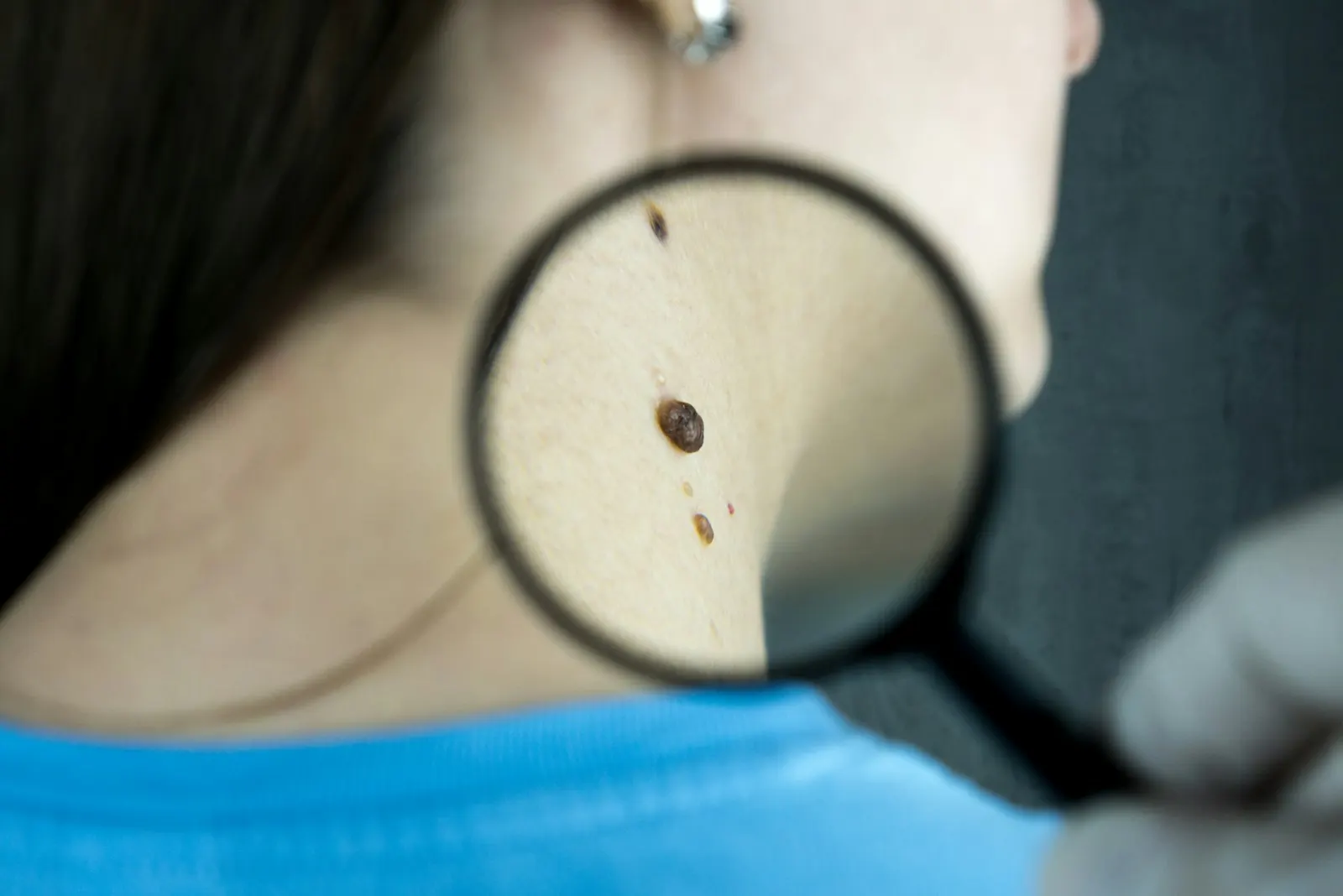
What it is
Skin tags are small, soft pieces of skin that often hang from a thin stalk. They tend to show up where skin rubs against skin or clothing, such as the neck, underarms or groin folds. Many people have them and they are usually painless.
Seborrheic keratosis is a common, non-cancerous skin growth that often looks brown, tan or black, and may seem waxy, rough or "stuck on" the skin. These growths can look a lot like warts to the untrained eye, which is one reason brown growths on skin cause so much confusion.
Warts are different. They are caused by a virus (human papillomavirus, or HPV) and can look rough, flat or raised. Because look-alike growths can resemble one another, and because some skin cancers can also look like a harmless bump, a clinician's exam is the reliable way to know what you have. A growth that is changing, bleeding, itching, irregular in shape or color, or not healing should be checked by a dermatologist for skin cancer, and should not be self-treated.
How it’s traditionally been approached
Skin tags have traditionally been left alone when they cause no trouble. When they bother someone, for example by catching on jewelry or clothing, a clinician may remove them in an office visit. Cutting or tying off a growth at home is not recommended, since it can lead to bleeding or infection and you can't be sure what the growth is.
Seborrheic keratosis is usually not treated unless it is irritated or someone dislikes how it looks. Clinicians have historically used several in-office methods to remove these growths. Which one, if any, is suitable is something a licensed provider decides after an exam.
Warts have traditionally been approached with over-the-counter products, in-office treatments, or simply watching and waiting, since some warts go away on their own. Results vary and warts can return. People with diabetes, poor circulation, neuropathy or a weakened immune system should ask a provider before treating warts, especially on the feet, at home. Facial and genital warts should not be treated with over-the-counter wart products. Please never cut, burn or dig out a growth yourself.
How the right provider may help
The right provider, such as a dermatologist, podiatrist, primary care clinician or sexual-health provider, may help by looking closely at the growth and telling you what it is. A visit generally begins with questions about when you noticed it and whether it has changed, followed by a skin exam. Sometimes a clinician may recommend sampling a growth for further testing.
If removal is something you want, a provider may talk through the options that could suit your situation, along with the possible downsides. Whether a product or procedure is appropriate, and its current regulatory status, is something only a licensed clinician can decide, so it is fine to ask about the FDA status of anything suggested to you.
Helpful questions to bring: What is this growth? Does it need to be checked for skin cancer? What are my options, including leaving it alone? What might the healing look like? Could it come back? Is there anything about my health that changes the plan? There is no wrong question, and many people feel embarrassed at first, which providers understand.

The whole-person view
Body, mind and stress affect each other. A skin concern can bring worry, self-consciousness or embarrassment, and stress can in turn make people feel worse about how they look or cause them to put off getting something checked. Treating yourself kindly and getting a clear answer from a clinician can ease some of that weight.
If body tension or stress feels like part of the picture, body-based support such as Somatic Experiences may be something to explore. If worry or self-image feelings are weighing on you, talk therapy through Therapists.plus is another possibility. These are supportive options, not replacements for a skin exam, and Providers.plus lists licensed providers if you are looking for one.
Somatic Experiences: nervous system regulation →Therapists.plus: anxiety panic and ocd →
Keep in mind
- Warts.ai is educational only and is not medical advice; a licensed clinician must examine any growth before anyone can say what it is.
- A growth that is changing, bleeding, itching, irregular in shape or color, or not healing should be checked by a dermatologist for skin cancer. The ABCDEs of melanoma are only a general guide, not a way to diagnose yourself.
- No treatment is guaranteed to remove a growth or keep it from coming back, and results vary. Do not cut, burn or dig out growths at home.
- Licensed professionals should guide your care. For emergencies call 911; if you are in crisis, call or text 988.
Guides in this topic
Provider types
Skin tags
skin tag removal · snip, freeze or cautery removal
Seborrheic keratosis
diagnosis of seborrheic keratoses · cosmetic removal · biopsy when a growth looks unusual
Excision & surgical removal
shave or snip excision · curettage and electrodesiccation · biopsy with removal
Cryotherapy (freezing)
liquid nitrogen cryotherapy · repeat freezing sessions
Frequently asked questions
What is the difference between a skin tag and a wart?
A skin tag is typically a soft, skin-colored flap that hangs from the skin, while a wart is caused by HPV and is often rougher or more firm. They can look alike, though, so a clinician's exam is the dependable way to tell them apart. Please don't try to identify or treat a growth on your own.
What causes skin tags?
The exact reasons are not fully understood, but skin tags tend to form where skin rubs against skin or clothing. They are generally harmless and not caused by a virus the way warts are. A clinician can talk with you about your own situation.
Is seborrheic keratosis the same as a wart?
No, seborrheic keratosis is a common non-cancerous growth, not a viral wart, though the two can look similar. Seborrheic keratosis often appears brown, tan or black and may seem waxy or "stuck on." Because other growths, including some skin cancers, can look similar, have a dermatologist check anything uncertain.
Are brown growths on skin dangerous?
Many brown growths on skin are harmless, but you can't reliably tell by looking, so it's wise to have them checked. A growth that is changing, bleeding, itching, irregular in shape or color, or not healing should be seen by a dermatologist for skin cancer. Don't self-treat it.
Can I do skin tag removal or wart removal at home?
It's best to ask a clinician first, and you should never cut, burn or dig out a growth at home. Over-the-counter wart products exist for some common warts, but people with diabetes, poor circulation, neuropathy or a weakened immune system should check with a provider first, and these products should not be used on the face or genitals. Results vary and warts can return.
Who should I see about wart removal or a skin growth?
A dermatologist is often a good starting point, and a podiatrist, primary care clinician or sexual-health provider may also help depending on where the growth is. They can examine it, tell you what it is and discuss whether any removal option fits you. Providers.plus lists licensed providers if you need help finding one.
Educational resource. Warts.ai shares general information and connects people with independent providers. It is not medical advice, diagnosis or treatment. Talk with a licensed professional about your health.