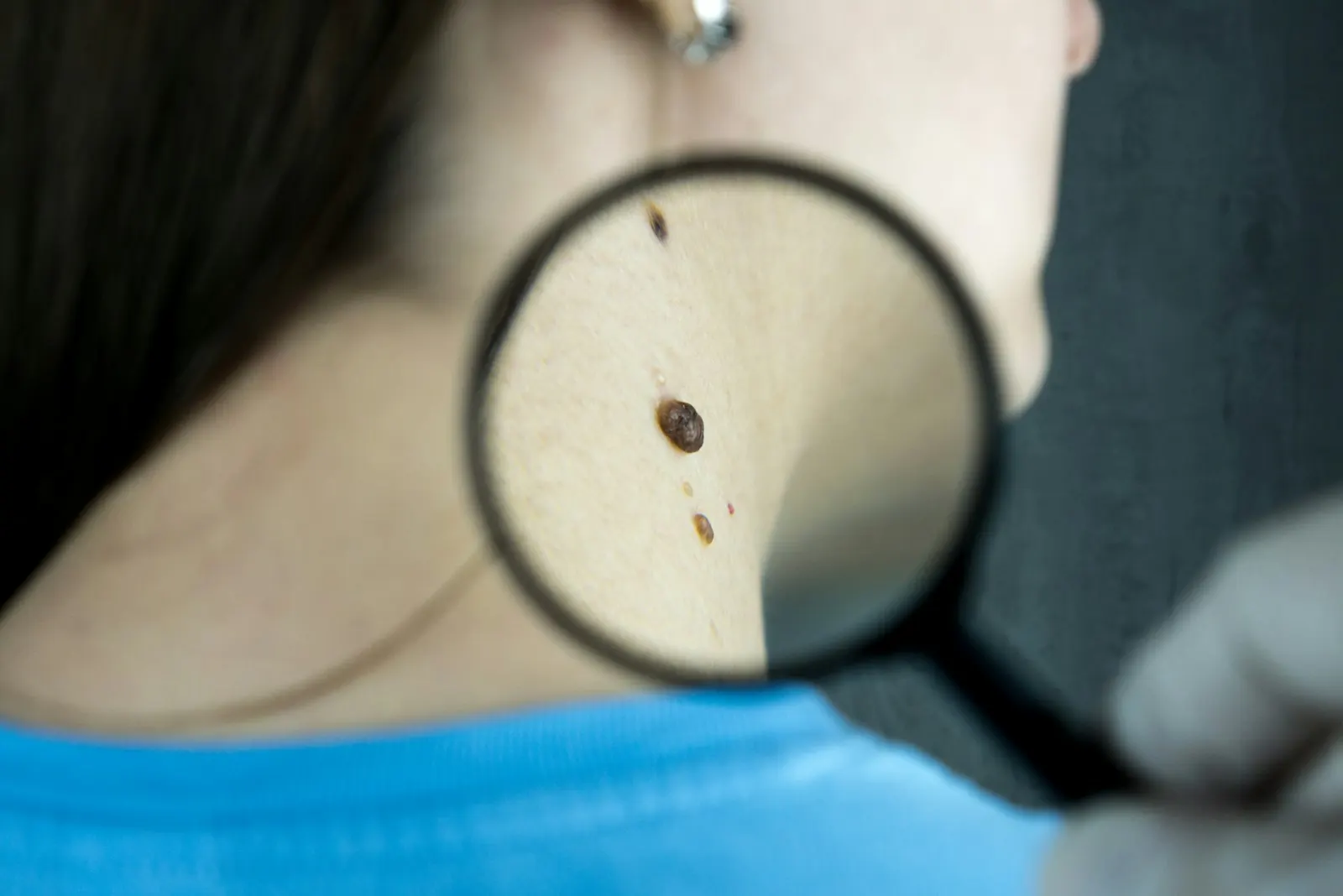
What it is
Skin tags are small, soft, flesh-colored or slightly darker growths that hang from the skin on a thin stalk. They often show up in places like the neck, underarms, eyelids, groin folds and under the breasts. They're usually painless.
No single cause is known. Friction from skin rubbing on skin or on clothing is commonly mentioned. Other factors often associated with them include genetics and family history, changes in weight, hormonal shifts such as pregnancy, and certain metabolic health conditions. Being associated with something is not the same as being caused by it.
Skin tags are not the same as warts, though people sometimes mix them up. Warts are linked to a virus, while skin tags are not generally described that way. Only a licensed clinician can tell what a growth actually is, so an exam is the reliable way to know.
How it’s traditionally been approached
Many skin tags are simply left alone, since they are often harmless and cause no symptoms. People commonly seek attention when a tag is bothersome, catches on jewelry or clothing, bleeds from irritation, or affects how they feel about their appearance.
When removal is wanted, clinicians have traditionally used approaches such as snipping with sterile instruments, freezing (cryotherapy), or other in-office methods. Which one fits depends on the size, location and the person's health, and that is a decision for a clinician after an evaluation.
Over-the-counter skin tag products exist, and some people ask about them. Cutting, burning or tying off a growth at home is not advised, because of the risk of bleeding, infection and scarring. Skin around the eyes, face and genitals should not be treated with over-the-counter products. People with diabetes, poor circulation, neuropathy or a weakened immune system should ask a provider before treating anything at home. Results vary, and skin tags can return or new ones can form.
How the right provider may help
The right provider, such as a dermatologist or primary care clinician, may start by looking at the growth and asking about your health history. This matters because some growths that look like skin tags can be something else, such as a seborrheic keratosis, a wart or, rarely, a skin cancer.
Any growth that is changing, bleeding, itching, irregular in shape or color, or not healing should be checked by a dermatologist for skin cancer, and should not be self-treated. The ABCDEs of melanoma (asymmetry, border, color, diameter, evolving) are a general awareness guide only. They are not a way to diagnose yourself.
Questions you might bring to a visit: Is this a skin tag? Does it need to be removed, or can it be watched? What are the options for this spot, and what are the risks? What should healing look like? Could more appear, and does anything in my health history matter? Ask your provider as well about what their approach can and cannot do, since no approach is guaranteed.

The whole-person view
Body, mind and stress affect each other. Some people feel self-conscious about a visible skin change, and stress can make it harder to take care of ourselves or to feel at ease in our own skin. Skin and overall health also often move together, so general wellbeing, sleep, movement and regular checkups all play a part.
If body tension or stress feels like a big part of the picture, body-based support such as Somatic Experiences may be one resource to explore. If worry or self-image feels heavy, talk therapy through Therapists.plus is another. Neither replaces a skin exam by a licensed clinician, and both are optional ways to feel more supported.
Somatic Experiences: nervous system regulation →Therapists.plus: anxiety panic and ocd →
Keep in mind
- Educational only: Warts.ai does not give medical advice, and cannot tell you what a growth is or which option you need.
- Have any new or changing growth examined by a licensed clinician, especially one that is bleeding, itching, changing in shape or color, or not healing.
- Do not cut, burn or dig out a growth at home. Ask a provider first if you have diabetes, poor circulation, neuropathy or a weakened immune system.
- For emergencies call 911. If you are in crisis or feeling overwhelmed, call or text 988.
Not sure where to start? Answer a few gentle questions and choose who you’d like to hear from.
Frequently asked questions
What causes skin tags?
The exact cause of skin tags isn't fully known. Friction from skin rubbing on skin or clothing is commonly mentioned, along with family history, weight changes, hormonal shifts and some metabolic conditions. A licensed clinician can look at your skin and talk through what may apply to you.
Are skin tags caused by a virus?
Skin tags are not generally described as a viral growth the way warts are. Because it can be hard to tell growths apart by eye, a clinician's exam is the dependable way to know what you have.
Are skin tags contagious?
Skin tags are not generally considered contagious, so they aren't typically passed from person to person by touch. If you aren't sure that a growth is a skin tag, a clinician can check it.
Why do I keep getting skin tags?
Some people seem more prone to them, and family history, friction in skin folds and certain health factors are often mentioned. Skin tags can return or new ones can form after removal. A provider can discuss what might be going on for you.
Should I get a skin tag checked?
Yes, a first exam by a dermatologist or other licensed clinician is a good idea, and especially so if a growth is changing, bleeding, itching, irregular in shape or color, or not healing. These signs call for a skin cancer check, and the growth should not be self-treated.
Can I remove a skin tag at home?
Cutting, burning or digging out a growth at home is not advised because of the risk of bleeding, infection and scarring. Over-the-counter products should not be used on the face, eyelids or genitals. People with diabetes, poor circulation, neuropathy or a weakened immune system should ask a provider before trying anything. Results vary, and skin tags can come back.
Educational resource. Warts.ai shares general information and connects people with independent providers. It is not medical advice, diagnosis or treatment. Talk with a licensed professional about your health.