What it is
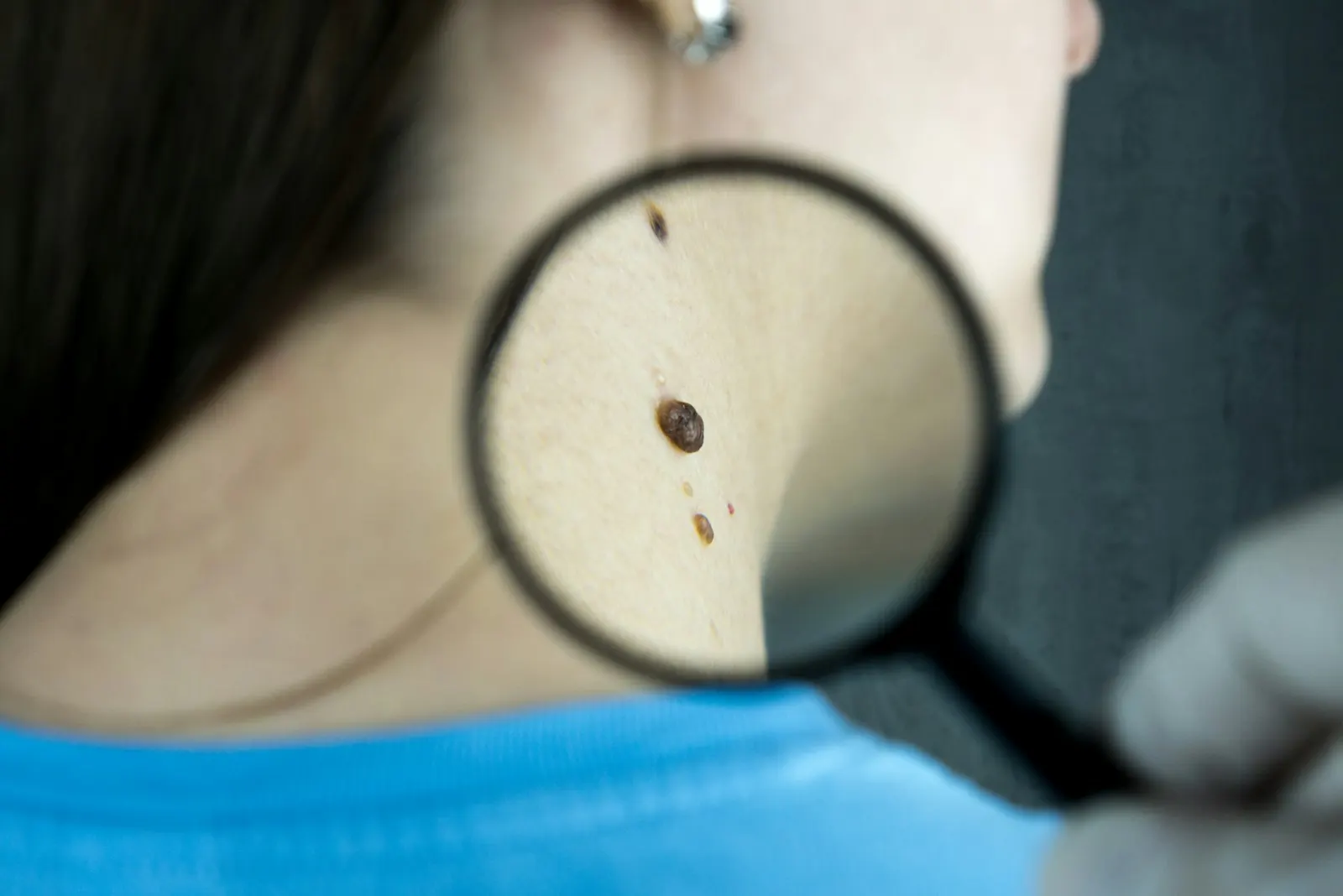
A seborrheic keratosis is a benign (non-cancerous) skin growth that many people notice as they get older. It is often described as waxy, rough, or "stuck on" the skin, and it can range from light tan to dark brown. It is not contagious and is not caused by a virus.
A common wart is a skin growth caused by an HPV infection of the skin. Warts are often described as rough or bumpy, and they can appear on hands, feet, and other areas. Unlike a seborrheic keratosis, a wart can spread from person to person or from one part of the body to another.
Because both can be raised, rough, and variable in color, it is easy to mistake one for the other, and other growths can look similar too. Some skin cancers can also resemble harmless growths. Any spot that is changing, bleeding, itching, irregular in shape or color, or not healing should be checked by a dermatologist for skin cancer and should not be self-treated. The ABCDEs of melanoma (asymmetry, border, color, diameter, evolving) are a general awareness guide only, never a way to diagnose yourself.
How it’s traditionally been approached
Clinicians have traditionally started with a visual exam, sometimes using a handheld magnifying tool called a dermatoscope. In some cases a clinician may decide a sample of tissue should be looked at in a lab. Which steps are appropriate is a decision for the clinician after an evaluation.
Seborrheic keratoses are often simply monitored if they are not bothering the person. When someone wants one removed because of irritation, snagging on clothing, or appearance, approaches have traditionally included freezing (cryotherapy), scraping, or other procedures performed by a clinician. Results vary from person to person.
Warts have traditionally been approached with over-the-counter products, clinician-applied treatments such as freezing, prescription options, or sometimes simply watchful waiting. Warts can return after treatment, and no approach is guaranteed to remove one. People with diabetes, poor circulation, neuropathy, or a weakened immune system should ask a provider before treating a wart at home, especially on the feet. Facial and genital growths should not be treated with over-the-counter wart products, and no growth should ever be cut, burned, or dug out at home.
How the right provider may help
The right provider, such as a dermatologist, podiatrist, or primary care clinician, may be able to look at your skin growth, talk through what they see, and explain whether further evaluation is worthwhile. A visit generally involves questions about when you first noticed the spot and whether it has changed, followed by a skin exam. Many people feel embarrassed about skin growths, and clinicians see them every day.
Helpful questions to bring may include: What do you think this growth is, and how sure are you? Does it need any testing? Should it be monitored, and for what changes? If I want it removed, what options might fit my situation, and what are the possible downsides, including scarring or the chance it returns?
If a prescription product or procedure comes up, ask your provider about its current regulatory status, including FDA status where relevant, and whether it is appropriate for you. Only a licensed clinician can decide what is right after an evaluation. You can also use Providers.plus to find licensed providers to consider.

The whole-person view
Body, mind, and stress influence one another. Skin changes can bring worry, self-consciousness, or a lot of time spent checking and researching, and stress can make everything feel heavier. Looking after sleep, movement, and rest supports you as a whole person, though it is not a substitute for having a growth examined.
If worry about your skin is weighing on you, body-based support such as Somatic Experiences may help some people feel more settled in their bodies, and talk therapy through Therapists.plus may help with anxiety or self-image. These are supportive options alongside, not instead of, medical care from a licensed clinician.
Somatic Experiences: nervous system regulation →Therapists.plus: anxiety panic and ocd →
Keep in mind
- This page is educational only and is not medical advice; it cannot tell you what a particular growth is or which treatment you need.
- Have any growth that is changing, bleeding, itching, irregular in shape or color, or not healing checked by a dermatologist for skin cancer, and do not self-treat it.
- Warts can return, results vary, and no treatment is guaranteed; ask a licensed clinician about options, risks, and regulatory status.
- For emergencies call 911; if you are in emotional crisis, call or text the 988 Lifeline.
Not sure where to start? Answer a few gentle questions and choose who you’d like to hear from.
Frequently asked questions
What is the difference between seborrheic keratosis and a wart?
A seborrheic keratosis is a benign skin growth that is not caused by a virus and is not contagious, while a wart is caused by HPV and can spread. They can look alike, so a licensed clinician needs to examine the growth to tell them apart.
Is a seborrheic keratosis contagious like a wart?
No, a seborrheic keratosis is not considered contagious. Warts are caused by a virus and can spread through contact. If you are unsure which you have, a clinician can examine it.
Can I tell seborrheic keratosis vs wart by looking at it myself?
Not reliably. Both can be raised, rough, and variable in color, and some skin cancers can look similar. A dermatologist or other licensed clinician is the right person to evaluate it.
Can a seborrheic keratosis turn into skin cancer?
A seborrheic keratosis is generally considered benign, but other growths, including skin cancers, can resemble it. Any spot that is changing, bleeding, itching, irregular, or not healing should be checked by a dermatologist and not self-treated.
Can I use over-the-counter wart remover on a seborrheic keratosis?
It is best not to, because you cannot be sure what the growth is without an exam. Over-the-counter wart products are meant for common warts, and they should not be used on the face or genital area. Ask a clinician first, especially if you have diabetes, poor circulation, neuropathy, or a weakened immune system.
Who should look at a growth I think might be a wart or seborrheic keratosis?
A dermatologist is often a good choice, and primary care clinicians or podiatrists (for the feet) can also examine skin growths. They can discuss whether monitoring, testing, or removal is appropriate. Results vary, and growths can sometimes return.
Educational resource. Warts.ai shares general information and connects people with independent providers. It is not medical advice, diagnosis or treatment. Talk with a licensed professional about your health.