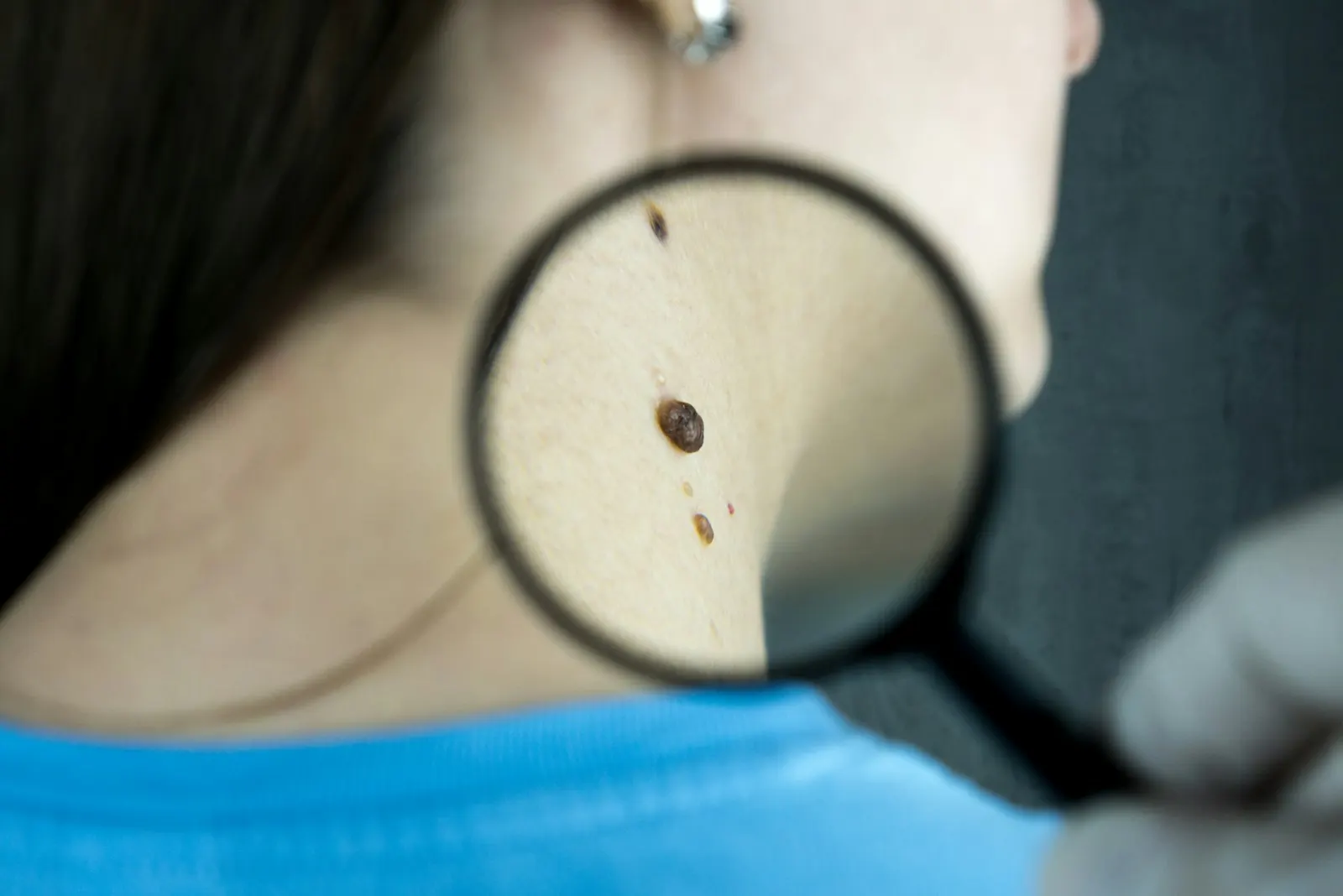
What it is
A skin tag is a small, soft, flesh-colored or slightly darker growth that hangs from the skin on a thin stalk. They often appear where skin rubs against skin or clothing, such as the neck, underarms, eyelids, or groin folds. Many are painless and cause no problems.
Skin tags are sometimes confused with warts, moles, or seborrheic keratoses, which are waxy, "stuck-on" looking growths. These can look alike to the untrained eye, and appearance alone is not a reliable way to tell them apart. That is why an exam by a licensed clinician matters.
If a spot is changing, bleeding, itching, irregular in shape or color, or not healing, it should be checked by a dermatologist for skin cancer rather than assumed to be a skin tag. Please do not self-treat a growth you are unsure about.
How it’s traditionally been approached
Many skin tags are simply left alone, since they are often harmless. Some people ask about removal because a tag catches on jewelry or clothing, gets irritated, or bothers them cosmetically.
In a clinical setting, removal has traditionally included approaches such as snipping with sterile instruments, freezing (cryotherapy), or using heat-based tools. Which option, if any, is appropriate is decided by a licensed clinician after an evaluation, and it depends on the size, location, and the person's health.
Over-the-counter products and home methods exist, and people often wonder about them. Cutting, burning, or tying off a growth at home is not advised, because of the risk of bleeding, infection, scarring, and missing something that needed a professional look. People with diabetes, poor circulation, neuropathy, or a weakened immune system should ask a provider before treating anything at home. Products near the eyes, face, or genitals should not be treated with over-the-counter wart or skin products. Results vary, and new skin tags can appear later.
How the right provider may help
The right provider, such as a dermatologist or primary care clinician, may help by first looking closely at the growth and confirming what it is. That step can offer peace of mind, and it can catch anything that deserves closer attention. Some clinicians may recommend a sample be examined in a lab if something looks unusual.
A visit is generally a conversation. You can expect questions about how long the spot has been there, whether it has changed, and whether it bothers you. If removal is an option, the clinician can explain what the process involves, how the area is cared for afterward, and what to watch for.
Helpful questions to ask: Is this definitely a skin tag? Does it need to be removed, or can it be watched? What are the options for this location? What are the risks, and could it leave a mark? Might others grow back? Is removal considered cosmetic, and how would that affect coverage? Your provider can answer these for your situation.

The whole-person view
Body, mind, and stress influence each other. Skin can feel like a very visible part of how we see ourselves, so a growth you feel self-conscious about can carry real emotional weight, and that feeling is valid. Stress, sleep, and overall health can also shape how we experience our bodies.
If body-based support interests you, resources such as Somatic Experiences list practitioners who focus on the body's stress responses. If worry or self-image feelings are weighing on you, Therapists.plus can connect you with talk therapy options. These are complements to medical care, not replacements for it.
Somatic Experiences: nervous system regulation →Therapists.plus: anxiety panic and ocd →
Keep in mind
- Warts.ai is educational only and does not give medical advice, diagnose conditions, or recommend a treatment for you.
- Any growth that is changing, bleeding, itching, irregular in shape or color, or not healing should be checked by a dermatologist for skin cancer, and should not be self-treated.
- Only a licensed clinician can decide what is appropriate after an exam, and no approach guarantees removal or that a growth won't return; results vary.
- For emergencies call 911; in an emotional crisis call or text the 988 Lifeline.
Not sure where to start? Answer a few gentle questions and choose who you’d like to hear from.
Frequently asked questions
What is skin tag removal?
Skin tag removal is when a licensed clinician takes off a skin tag, a small soft growth on a stalk, using a method chosen after an exam. It is often considered cosmetic, though some people seek it for irritation. Results vary, and new skin tags can still appear.
Are skin tags dangerous?
Skin tags are commonly harmless, but you cannot reliably tell by looking whether a growth is one. Any spot that is changing, bleeding, itching, irregular in shape or color, or not healing should be checked by a dermatologist for skin cancer. A clinician can confirm what it is.
Can I remove a skin tag at home?
It is best to have a clinician look first, and cutting, burning, or digging out a growth at home is not advised because of bleeding, infection, and scarring risks. People with diabetes, poor circulation, neuropathy, or a weakened immune system should ask a provider before any home treatment. Over-the-counter products should not be used on the face, eyelids, or genital area.
Who does skin tag removal?
Dermatologists commonly handle skin tag removal, and some primary care clinicians and other licensed providers may as well. Ask whether the provider is licensed and experienced with the growth's location. You can browse licensed providers through Providers.plus.
Do skin tags grow back after removal?
A removed skin tag may not return in the same spot, but there is no guarantee, and new tags can develop elsewhere. Results vary from person to person. A provider can talk with you about what to expect.
Is skin tag removal covered by insurance?
Coverage depends on your plan and on whether removal is considered cosmetic or medically needed. Ask the provider's office and your insurer before a visit so you know what to expect. Costs are not listed here.
Educational resource. Warts.ai shares general information and connects people with independent providers. It is not medical advice, diagnosis or treatment. Talk with a licensed professional about your health.