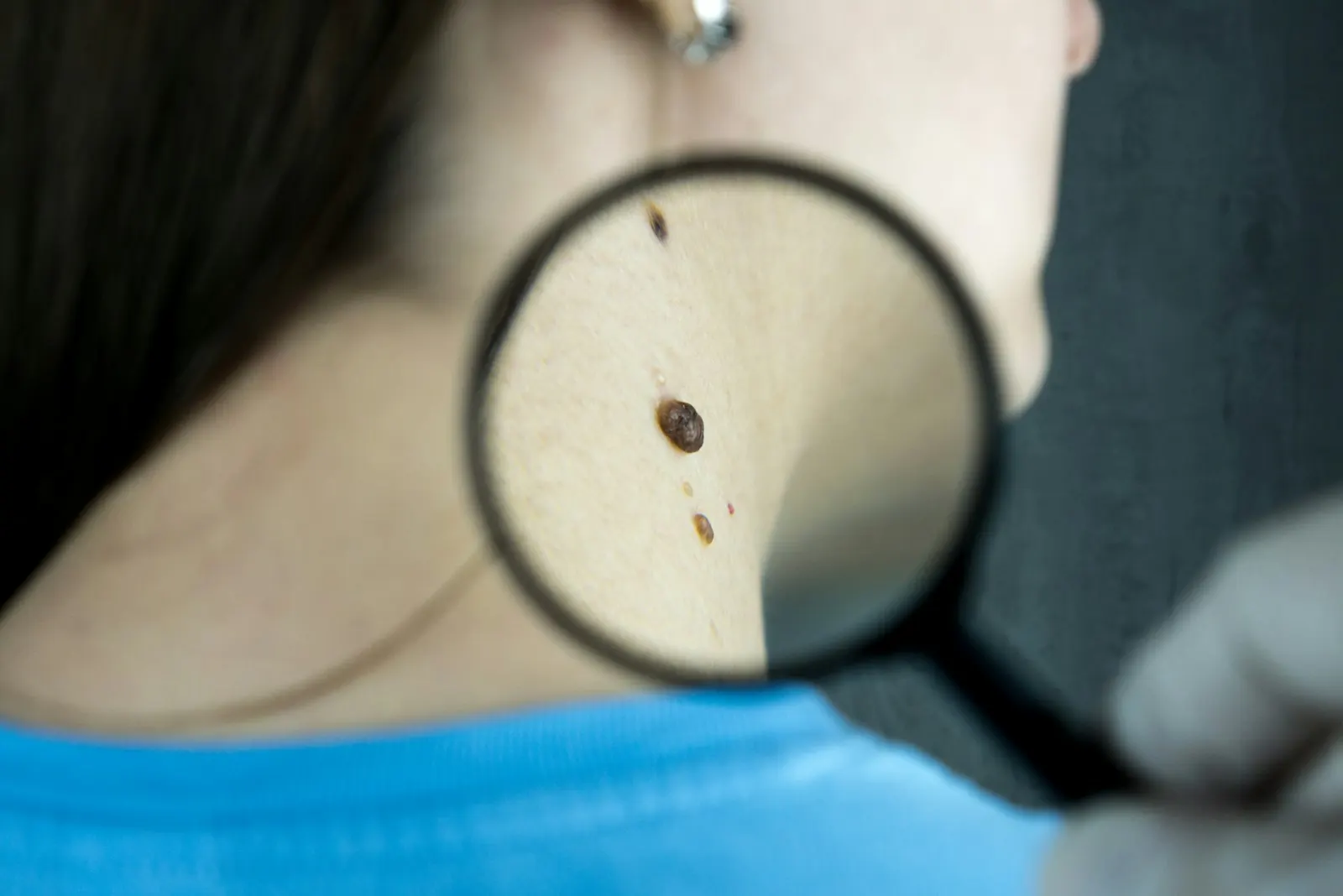
What it is
A seborrheic keratosis is a skin growth that often appears as a raised, waxy, scaly, or slightly rough patch. Colors can range from light tan to dark brown or black, and it often looks as if it were pressed onto the surface of the skin. It is usually painless, though it can sometimes itch or catch on clothing.
People sometimes call these growths "age spots" or "barnacles" and sometimes confuse them with warts. They are not the same thing as a wart, which is related to a virus, and seborrheic keratosis is not considered contagious. They can show up on the chest, back, face, scalp, or other areas.
Because several skin conditions can look alike, including some that matter more, appearance alone is not a reliable way to tell them apart. A growth that is changing, bleeding, itching, irregular in shape or color, or not healing should be checked by a dermatologist for skin cancer, and should not be self-treated. The ABCDEs of melanoma (asymmetry, border, color, diameter, evolving) are only a general guide for knowing when to get something looked at, not a way to diagnose yourself.
How it’s traditionally been approached
Many seborrheic keratoses are simply left alone once a clinician has confirmed what they are, since they are typically harmless. Some people choose to have one addressed because it is irritated by clothing or jewelry, bothers them cosmetically, or is hard to tell apart from something else.
When removal is chosen, clinicians have traditionally used approaches such as cryotherapy (freezing), scraping, or surgical excision. Which approach is considered depends on the growth, its location, and the person's skin and health, and that decision belongs to a licensed clinician after an exam.
If there is any question about what a growth is, a provider may take a sample or remove it for laboratory review. Results vary, and skin growths can sometimes appear again or new ones can develop. Over-the-counter wart products are not designed for these growths, and cutting, burning, or digging out a growth at home is not advised.
How the right provider may help
A visit with a dermatologist or other licensed clinician usually starts with a conversation about the spot: when you noticed it, whether it has changed, and whether it itches, bleeds, or hurts. The provider will typically look closely at the skin, sometimes with a handheld magnifying device, and may check other areas too.
The right provider may help by telling you what the growth appears to be, whether it needs any further testing, and whether leaving it alone or addressing it is reasonable. If you are considering removal, they can explain the options that may fit your situation and what recovery may look like.
Helpful questions to ask include: What do you think this growth is, and how sure are you? Should any of it be tested? What are the options, including doing nothing? What are the possible side effects, such as marks or color changes? How should I watch for changes, and when should I come back? Tell the provider about any diabetes, circulation problems, or immune conditions, as these can matter.

The whole-person view
Body, mind, and stress influence each other, and skin is a place where people often feel that connection. Noticing a new growth can bring worry or self-consciousness, and stress can make us more tuned in to every change in our bodies. That reaction is human and nothing to be embarrassed about.
If body-based support appeals to you, Somatic Experiences lists practitioners who focus on how the body holds and releases tension. If worry about appearance or health is weighing on you, Therapists.plus can connect you with talk therapy options. These are complements to, not replacements for, a skin exam by a licensed clinician.
Somatic Experiences: nervous system regulation →Therapists.plus: anxiety panic and ocd →
Keep in mind
- This page is educational only and is not medical advice; it cannot tell you what a spot on your skin is or what you need.
- Any growth that is changing, bleeding, itching, irregular in shape or color, or not healing should be checked by a dermatologist for skin cancer rather than self-treated.
- Licensed professionals should guide any removal decision, and results vary; growths can return or new ones can appear.
- For an emergency, call 911. If you are in crisis or feeling overwhelmed, call or text 988.
Not sure where to start? Answer a few gentle questions and choose who you’d like to hear from.
Frequently asked questions
What is seborrheic keratosis?
Seborrheic keratosis is a common, usually harmless skin growth that often looks waxy, rough, or "stuck on." It tends to appear more with age and is not contagious. A licensed clinician should confirm any growth, since other conditions can look similar.
Is seborrheic keratosis cancer?
Seborrheic keratosis is generally not considered cancerous. However, it can resemble other growths, including some skin cancers, so only a dermatologist or other licensed clinician can tell them apart. Have any growth that is changing, bleeding, itching, irregular, or not healing checked.
Is seborrheic keratosis the same as a wart?
No, seborrheic keratosis is not a wart. Warts are related to a virus, while seborrheic keratosis is a different type of skin growth that is not considered contagious. Because they can look alike, a provider can help sort out which one you have.
Can I remove a seborrheic keratosis at home?
Home removal is not recommended. Cutting, burning, or digging out a growth can cause irritation, infection, or scarring, and it can hide a spot that should have been examined. Over-the-counter wart products are not made for these growths, so ask a licensed clinician about safe options.
How do doctors remove seborrheic keratosis?
Clinicians have traditionally used approaches such as cryotherapy (freezing), scraping, or surgical excision. Which one is considered depends on the growth and your health, and a licensed clinician decides after an exam. Results vary, and growths can sometimes return.
Which doctor should I see for seborrheic keratosis?
A dermatologist is typically the provider who evaluates skin growths, though a primary care clinician can be a good first step. Bring notes on when you noticed the spot and any changes. You can also look for licensed providers through Providers.plus.
Educational resource. Warts.ai shares general information and connects people with independent providers. It is not medical advice, diagnosis or treatment. Talk with a licensed professional about your health.